

Architectural Wayfinding Signage: Everything You Need to Know
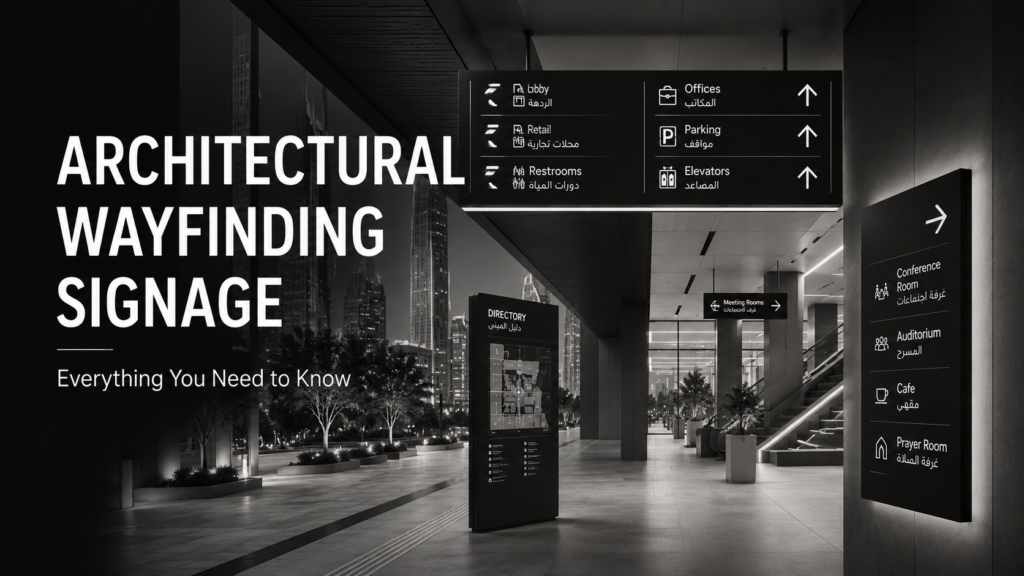
Architectural wayfinding signage is a strategically designed signage system that helps people navigate buildings and public spaces with ease. By combining clear visual communication, intuitive design, and architectural integration, it improves visitor experience, enhances accessibility, strengthens brand identity, and supports safety. This guide covers its types, key components, benefits, and best practices for creating effective wayfinding systems.
What Is Architectural Wayfinding Signage?
Architectural wayfinding signage is a system of strategically designed signs integrated into a building’s architecture to help people navigate spaces safely, efficiently, and intuitively. It combines visual communication, spatial planning, and environmental design to guide visitors through complex environments such as offices, hospitals, airports, and educational institutions.
An efficient wayfinding system helps users to:
- Identify their current location.
- Determine the best route to their destination.
- Navigate the environment safely, efficiently, and confidently.
By combining architecture, interior design, visual communication, and environmental psychology, architectural wayfinding signage creates intuitive navigation systems that reduce confusion, improve accessibility, and enhance the overall visitor experience.
Why It Matters
offers benefits for both visitors and facility managers by improving navigation, enhancing accessibility, and creating a more organised environment.
- Improves user experience: Clear directional signage reduces confusion, minimises stress, and helps visitors reach their destinations quickly.
- Enhances Accessibility: Inclusive signage featuring high-contrast text, tactile elements, Braille, and universal symbols supports people with diverse abilities.
- Strengthens Brand Identity: Consistent colours, typography, materials, and design reinforce a company’s brand identity while maintaining a professional appearance.
- Enhances Safety: Clear and strategically placed wayfinding signage minimise confusion in large or complex buildings by directing people to safe routes, emergency exits, and essential facilities, improving overall occupant safety.
Types of Architectural Wayfinding Signage
Architectural wayfinding signage includes different types of signs, each designed for a specific role in the navigation system. Together, they help users navigate spaces, find key information, and follow safety guidelines, ensuring a seamless experience across commercial, healthcare, education, hospitality, and public environments.
- Identification Signs: Identification signs help users easily locate and recognise specific areas, such as entrances, offices, departments, meeting rooms, restrooms, and other facilities.
- Directional Signs: Directional signs guide users with arrows, symbols, and destination names, helping them navigate through corridors, intersections, elevators, staircases, and other key decision points.
- Regulatory Signs: Regulatory signs communicate rules, restrictions, and safety requirements, such as No Smoking, Authorised Personnel Only, and Emergency Exit signs.
- Informational Signs: Signs that provide essential information, including directories, maps, operating hours, visitor instructions, and facility details, aiding users in navigating without confusion.
- Digital Wayfinding Signage: Digital wayfinding signage uses interactive displays and real-time maps to help users quickly navigate large and complex facilities.
Key Components of an Effective Wayfinding System
An efficient wayfinding system integrates visual design, strategic planning, and accessibility to guide people through spaces effortlessly. These elements work together to provide a clear, uniform, and easy-to-use navigation interface.
- Typography: Proper, readable typography guarantees that signs are easy to see from a suitable distance. Choosing the right font size, style, and spacing improves readability and reduces confusion.
- Colour Coding: Colour coding helps users quickly identify zones, floors, and departments, making navigation faster and information easier to recognise.
- Icons and Symbols: Universal icons and symbols communicate information quickly, regardless of language. They enhance navigation by making signs more intuitive and accessible.
- Placement Strategy: Signs should be positioned at key decision points, such as entrances, intersections, elevators, and exits. Proper placement ensures users receive guidance exactly when they need it.
- Consistency: Consistent use of typography, colours, symbols, and design elements across all signage forms a unified wayfinding system that is easy to understand and follow.
- Accessibility Standards: Wayfinding signage should meet accessibility standards by using clear fonts, high-contrast colours, tactile elements, and proper mounting heights, ensuring everyone can navigate the space with confidence.
Where Architectural Wayfinding Signage Is Used
Architectural wayfinding signage is used across a wide range of industries to improve navigation, enhance visitor experience, and create safer, more organised environments.
- Corporate Offices: Helps employees, clients, and visitors easily locate reception areas, meeting rooms, departments, and workspaces.
- Hospitals: Helps to guide visitors to departments, clinics, emergency rooms, and other essential facilities, reducing confusion in complex healthcare environments.
- Educational Institutions: It guides students, staff, and visitors in navigating classrooms, libraries, administrative offices, laboratories, and campus buildings.
- Airports: Assists travellers to check-in counters, boarding gates, baggage claim, security checkpoints, and other key facilities for a smoother travel experience.
- Shopping Malls: Helps shoppers locate stores, food courts, restrooms, parking areas, and entertainment zones with ease.
- Hotels: Guides guests to reception desks, rooms, restaurants, conference halls, recreational facilities, and emergency exits.
- Government Buildings: It provides clear directions to departments, service counters, waiting areas, and public offices, improving accessibility and visitor convenience.
- Residential Complexes: Helps residents and visitors navigate building entrances, parking areas, amenities, towers, and common facilities efficiently.
Benefits of Architectural Wayfinding Signage
Wayfinding architectural signage helps people navigate spaces safely and efficiently by guiding them through. A well-designed system improves the visitor experience, ensures accessibility, and bolsters the building’s overall functionality.
- Improved Visitor Experience: Clear and intuitive signage helps visitors find their destinations quickly, reducing frustration and creating a more positive experience.
- Reduced Confusion: Well-placed wayfinding signs reduce confusion by providing clear directions at key decision points, making navigation easier in large or complex spaces.
- Enhanced Accessibility: Accessible signage uses clear text, high-contrast colours, and universal symbols to help people of all abilities navigate independently.
- Better Brand Recognition: Consistent signage that reflects an organisation’s colours, typography, and visual identity strengthens brand recognition and creates a professional appearance.
- Increased Safety During Emergencies: Wayfinding signage clearly identifies emergency exits, evacuation routes, and safety information, helping people respond quickly and safely during emergencies.
- Operational Efficiency: An effective wayfinding system reduces the need for staff assistance by helping visitors navigate independently, improving overall facility efficiency.
Common Mistakes to Avoid
Even well-designed spaces can become confusing if wayfinding signage is not well-planned. Avoiding these common errors will enhance clarity, consistency, and user-friendly navigation.
- Too much text: When signs carry too much information, they become difficult to read quickly. Keep messages concise and easy to understand.
- Poor visibility: Signs that are too small, difficult to read, or blocked can be easily overlooked. Make sure they are visible from the right distances and angles.
- Inconsistent design: Using different fonts, colours, and symbols on signs can create confusion. Keep the design language uniform throughout the wayfinding system.
- Wrong placement: Signs placed at decision points or in hidden locations are less effective. Ensure signs are placed where users naturally seek guidance.
- Lack of maintenance: Signs that are damaged, faded, or outdated can lead to confusion and reduce the overall visitor experience. Consistent checks and upkeep ensure the system functions well.
- Ignoring accessibility: Ignoring accessibility rules can lead to difficulties for disabled individuals in navigating. Use easy-to-read fonts, ensure there’s a good colour contrast, and include tactile elements as needed.
Future Trends in Architectural Wayfinding Signage
As technology advances and user needs change, architectural wayfinding signage is becoming more interactive, smarter, and more sustainable. These new developments are changing the way people find their way in modern buildings and public spaces.
- Interactive Digital Signage: Through interactive kiosks and digital displays, users can search for destinations, view maps, and receive real-time directions; this will enhance their navigation experience.
- Smart Navigation: Smart navigation systems use technologies like Bluetooth beacons, GPS, and indoor positioning to give users personalised, location-based directions through their mobile devices.
- QR Code Integration: QR codes on signs allow users to scan them with a smartphone to access digital maps, directories, visitor information, and navigation instructions.
- AI-Powered Navigation: Artificial intelligence improves wayfinding by providing real-time directions, voice guidance, and personalised navigation based on the user’s needs.
- Sustainable Signage Materials: Organisations are using eco-friendly materials, energy-efficient lighting, and recyclable components to create more sustainable wayfinding systems.
- Augmented Reality Wayfinding: Augmented reality (AR) adds digital directions to a user’s smartphone or smart glasses, making it easier to navigate complex indoor and outdoor spaces.
How to Choose the Right Architectural Wayfinding Signage Partner
Choosing the right architectural wayfinding signage partner is essential for creating a navigation system that is functional, visually consistent, and built to last. Look for a company with proven industry experience, strong design expertise, high-quality materials, reliable installation capabilities, and the ability to deliver customised solutions that align with your project’s requirements.
At Keystone Designs, we combine strategic wayfinding planning with innovative signage design to deliver solutions tailored to commercial, healthcare, hospitality, educational, and public spaces. From concept and material selection to installation and ongoing maintenance support, our team ensures every signage system enhances navigation, accessibility, and the overall user experience.
Frequently Asked Questions (FAQs)
- What is architectural wayfinding signage?
Architectural wayfinding signage is a system of strategically designed signs that helps people navigate buildings and public spaces safely, efficiently, and intuitively. - Where is architectural wayfinding signage commonly used?
It is commonly used in offices, hospitals, schools, airports, shopping malls, hotels, government buildings, and residential complexes. - How does wayfinding improve customer experience?
Wayfinding reduces confusion, saves time, and helps visitors reach their destinations quickly, creating a smoother and more positive experience. - What materials are best for architectural signage?
Common materials include acrylic, aluminium, stainless steel, glass, and wood, chosen based on durability, aesthetics, and the installation environment. - How much does architectural wayfinding signage cost?
The cost depends on the project size, sign types, materials, customization, and installation requirements. A site assessment provides the most accurate estimate. - What is the difference between architectural signage and wayfinding signage?
Architectural signage includes all signs integrated into a building’s design, while wayfinding signage specifically helps people navigate and find their destinations.
Conclusion
Architectural wayfinding signage is more than a collection of signs; it is a strategic system that improves navigation, accessibility, safety, and the overall visitor experience. By combining thoughtful design, clear communication, and consistent visual elements, organisations can create environments that are easy to navigate and leave a lasting positive impression.
Whether you’re planning a corporate office, hospital, educational campus, or commercial facility, investing in a well-designed wayfinding system delivers long-term value. At Keystone Designs, we create customised architectural wayfinding signage solutions that seamlessly integrate with your space, helping visitors navigate with confidence while strengthening your brand identity.
