
Impact of Signage and Wayfinding for Safety in Public Places
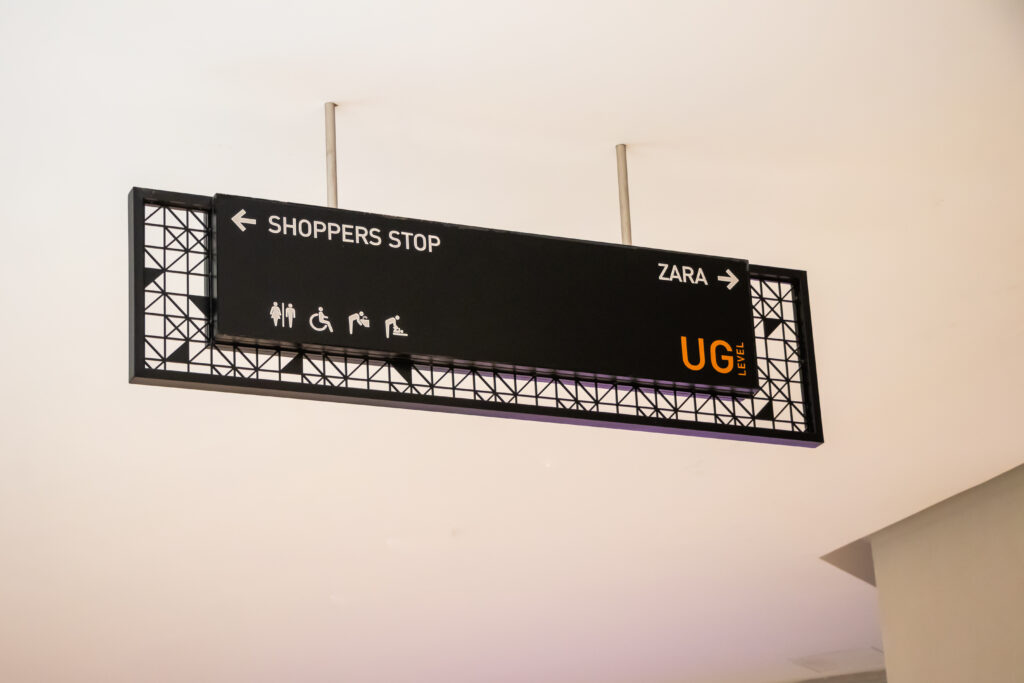
Public safety doesn’t begin with cameras or security teams. It begins with clear navigation. In busy public spaces, even a moment of confusion can increase risk.
Signage and wayfinding systems guide safe movement in everyday situations and become critical during emergencies. Whether it’s a fire alarm in a mall, a medical emergency in a hospital, or an airport evacuation, clear directions help people move quickly, calmly, and safely.
When navigation is clear, panic is reduced and response time improves, making wayfinding a quiet but essential part of public safety.
How Wayfinding and Signage Ensure Public Safety
When we think about public places, safety is the key. Signage and wayfinding systems are essential for guiding visitors and ensuring their safety. Clear, directional signage helps visitors navigate complex spaces quickly, guiding them to their destination and preventing accidents.
Well-designed wayfinding signage helps:
- Prevent navigation errors
- Reduce stress and panic
- Improve pedestrian flow
- Support emergency evacuation
- Enhance overall situational awareness
In public environments, professional signage systems transform confusing spaces into intuitive, accessible, and safer places for everyone.
1. Straight Forward Navigation Reduces Hazards
Public spaces with large crowds, such as airports, museums, stadiums, and shopping malls, can be difficult to navigate. When visitors do not know where they are or where to go, confusion and stress increase. This can lead to entry into restricted areas.
Clear wayfinding and signage systems reduce these risks by guiding people quickly and accurately through a space.
Effective wayfinding signs help by:
- Directing visitors to exits, elevators, and safe walking paths
- Reducing wandering around and navigational errors
- Supporting smooth movement in busy areas
Professional wayfinding consultants create layouts that minimize mistakes and improve flow. Many public facilities now use digital signage and wayfinding systems to improve navigation, visibility, and overall user experience.
2. Facilitating Quick And Efficient Emergency Responses
Public spaces with large crowds, such as airports, museums, stadiums, and shopping malls, can be difficult to navigate. When visitors do not know where they are or where to go, confusion and stress increase. This can lead to entry into restricted areas.
Clear wayfinding and signage systems reduce these risks by guiding people quickly and accurately through a space.
Effective wayfinding signs help by:
- Directing visitors to exits, elevators, and safe walking paths
- Reducing wandering around and navigational errors
- Supporting smooth movement in busy areas
Professional consultants create layouts that minimize wayfinding mistakes and improve flow. Many public facilities now use digital signage and wayfinding systems to improve navigation, visibility, and overall user experience.
3. Managing Crowds And Preventing Overcrowding
Crowded public spaces increase the risk of accidents, bottlenecks, and panic. Clear and strategically placed signage helps manage movement and reduce congestion.
Well-designed wayfinding systems guide people toward less crowded routes and distribute foot traffic evenly.
Wayfinding supports crowd safety by:
- Preventing bottlenecks and blocked pathways
- Reducing pushing and sudden crowd pressure
- Encouraging smooth, continuous movement
These smart systems are often developed by experienced wayfinding design consultants who analyze movement patterns to improve flow and reduce congestion. Working with a dedicated wayfinding studio can help design flexible systems that adapt to both everyday foot traffic and high-volume events.
4. Improving Accessibility for People with Disabilities
Accessible wayfinding design supports the safety, independence, and confidence of people with disabilities.
Inclusive signage includes features such as:
- Braille and tactile indicators for visually impaired users
- Auditory signals for people with hearing impairments
- Clear directions to ramps, elevators, and accessible restrooms
Wayfinding and signage design should clearly identify accessible routes so all visitors can navigate public spaces without barriers. Digital wayfinding signage can further assist by offering touch-based or real-time navigation options.
5. Enhancing Security and Preventing Crime
Wayfinding and signage play an important role in public security. Clear and effective wayfinding signage solutions increase visibility and encourage movement through well-lit, high-traffic areas.
Security-focused signage helps by:
- Indicating the presence of cameras or security patrols
- Guiding people away from isolated or hidden areas
- Supporting structured and predictable movement patterns
Digital wayfinding solutions allow safety teams to update security zones or restricted areas instantly. Wayfinding and signage design consultants help create layouts that balance accessibility, visibility, and security.
Human Psychology in Wayfinding and Signage Design
Clear Directional Signage Minimizes Navigation Stress
Clear and simple directional signage design helps users make informed decisions quickly without feeling overwhelmed. When signs are easy to read, people feel more at ease while navigating. That’s why smart signage and wayfinding design are so important in crowded or complex areas.Helping People Build Mental Maps Through Wayfinding
Wayfinding signage systems can help install signs at important locations, such as intersections, elevators, exits, and entrances. This facilitates navigation and helps with orientation. By ensuring that signage follows the natural flow of human movement, Wayfinding design consultants help individuals feel more secure and reduce their risk of becoming lost.Visual elements play a big role in how people read signs
The human brain processes visuals faster than text. Effective wayfinding design solutions include:
- Bold typography: It makes important information easy to read from a distance
- Large icons: Help people understand directions instantly, even if they do not understand the local language
- Clear contrast: Ensures text and symbols stand out clearly against the background in all lighting conditions
- Universal color cues: For example, red is used for warnings, and green is used for safety or exits
These elements improve comprehension and reaction time, especially in high-pressure situations.
Digital wayfinding signage is becoming more common in public spaces.
It provides real-time directions, interactive maps, and personalized navigation. This is especially useful in large spaces, such as hospitals, malls, airports, and campuses. Wayfinder digital signage and digital wayfinding solutions make spaces more accessible and user-friendly. Digital wayfinding design also enables updates during emergencies, thereby improving safety for everyone.Get Started with Effective Wayfinding and Signage Solutions
Proper signage and wayfinding systems are essential for creating safer and more accessible public spaces. Whether you’re looking to improve emergency preparedness, manage crowds, or enhance security, effective signage designs will help you achieve that.
Keystone Designs offers custom wayfinding and signage consultancy services in mumbai, prioritizing visitors’ safety and accessibility. Our expert signage and wayfinding consultants help enhance safety and overall visitor experience with our professional navigational signage and wayfinding solutions, directional signage design, and digital wayfinding. We also offer support in planning and implementation through our experienced wayfinding studio, helping you design with both form and function in mind.
Let us connect and make navigation easy for your space!










FAQs (frequently Asked Questions)
What is wayfinding signage in public spaces?
Wayfinding is the use of signage, visual cues, and navigation systems to help people understand where they are and how to move safely through public spaces.
How does wayfinding signage improve public safety?
Wayfinding improves public safety by reducing confusion, preventing navigation errors, supporting emergency evacuation, and guiding people through safe and visible routes.
Why is signage & wayfinding important during emergencies?
Clear signage helps people and emergency responders find exits, evacuation routes, and critical locations quickly when every second matters.
How do wayfinding signage solutions help manage crowds?
Wayfinding systems guide people along planned routes, reduce bottlenecks, and prevent overcrowding by distributing foot traffic more evenly across a space.
How does wayfinding support accessibility?
Accessible wayfinding includes braille, tactile indicators, audio cues, and clear directions to ramps and elevators, allowing people with disabilities to navigate independently.
What role does digital wayfinding play in public safety?
Digital wayfinding allows real-time updates to routes, emergency instructions, and restricted areas, improving response speed and adaptability during changing situations.
How does signage help prevent crime?
Well-placed signage increases visibility, directs people to well-lit areas, and signals security presence, which helps deter criminal activity in public spaces.
Who designs effective wayfinding and signage systems?
Wayfinding and signage design consultants analyze user behavior, space layout, and safety needs to create systems that improve navigation, accessibility, and security.